
Innovation & technology
Pressure Swing Adsorption Technology and System
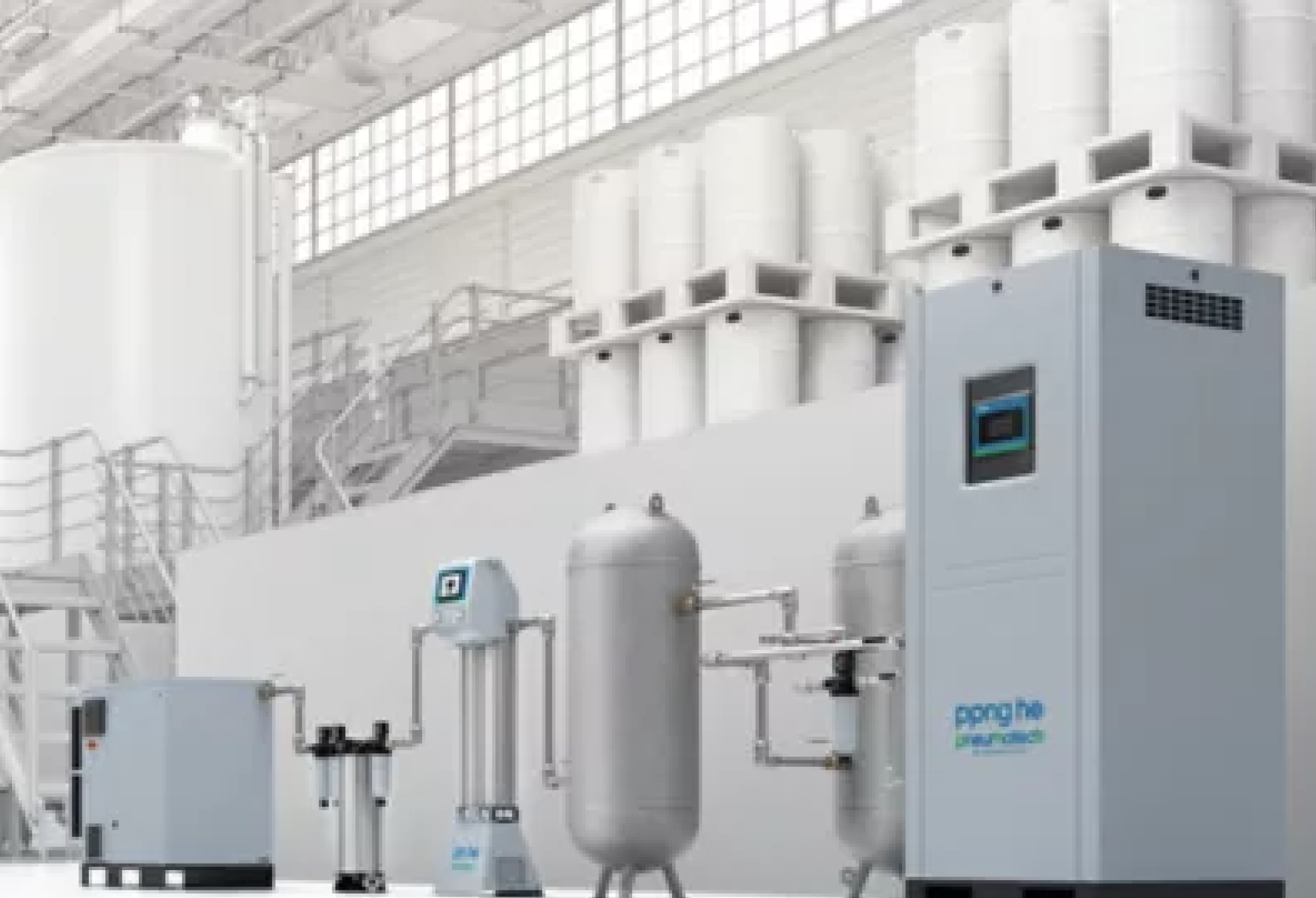
PSA technology enables autonomous on-site production of high-purity gases through pressure swing adsorption, reducing dependence on external suppliers and improving operational continuity for healthcare and industrial facilities.
Pressure Swing Adsorption (PSA) Technology – smart turnkey solutions that ensure autonomy, superior certified purification, performance, and reliable results.
What is PSA?
PSA is a technology used to separate gases present in a mixture, taking advantage of the ability of certain materials (adsorbents) to selectively retain one type of gas when pressure increases.
It is widely used to produce medical and industrial oxygen, nitrogen, and medical air, as well as to purify other industrial gases such as carbon dioxide.
It is widely used to produce medical and industrial oxygen, nitrogen, and medical air, as well as to purify other industrial gases such as carbon dioxide.
How does it work?
1 - Compressing the air/gas: the gas mixture is compressed and sent into a vessel filled with adsorbent material (zeolites, activated carbon, molecular sieves).
2 - Adsorption (high pressure): under high pressure, the adsorbent captures the unwanted gas; the desired gas, such as oxygen, passes through freely and is collected at high purity.
2 - Adsorption (high pressure): under high pressure, the adsorbent captures the unwanted gas; the desired gas, such as oxygen, passes through freely and is collected at high purity.
What is it used for?
- Produção de oxigénio medicinal (99% de pureza);
- Produção de nitrogénio para indústria (99% de pureza);
- Purificação de hidrogénio;
- Separação de CO2 em processos industriais;
- Ar respirável em hospitais e laboratórios;
- Produção de gases on site e escala non-stop (24h/7d).
Operating Principle
The PSA system operates in rapid high-pressure / low-pressure cycles:
Adsorption: the compressed gas mixture passes through an adsorbent bed; the adsorbent retains unwanted gases; the desired gas exits purified.
Depressurization (desorption): pressure is reduced; the bed releases the adsorbed gas.
Regeneration: the adsorbent is cleaned and ready for a new cycle.
Adsorption: the compressed gas mixture passes through an adsorbent bed; the adsorbent retains unwanted gases; the desired gas exits purified.
Depressurization (desorption): pressure is reduced; the bed releases the adsorbed gas.
Regeneration: the adsorbent is cleaned and ready for a new cycle.
- Adsorção: a mistura gasosa comprimida passa por um leito adsorvente; o adsorvente retém (adsorve) gases indesejados; o gás desejado sai purificado.
- Despressurização (dessorção): a pressão é reduzida; o leito libera o gás adsorvido.
- Regeneração: o adsorvente fica “limpo” e pronto para um novo ciclo.
Air compressor; Particle and oil filters; Air dryer; PSA columns with molecular sieves (zeolite, activated carbon); Automatic pneumatic valves; Buffer tank; Control panel + PLC; Safety system (pressure switches, relief valves).
- Compressor de ar;
- Filtros de partículas e óleo;
- Secador de ar;
- Colunas PSA com peneiras moleculares (zeólita, carvão ativado);
- Válvulas pneumáticas automáticas;
- Tanque pulmão;
- Painel de controle + PLC;
- Sistema de segurança (pressoestatos, válvulas de alívio).
Especificações Técnicas
- Valores podem ser ajustados conforme aplicação – oxigénio, nitrogénio/etc.
- Pureza do Gás Produzido: 99%–99,5%
- Pressão de Operação: 5 – 10 bar
- Pressão de Saída: 3 – 5 bar regulável
- Ciclo PSA: 5–10 segundos por coluna
- Consumo de Ar: Conforme capacidade do modelo
- Temperatura de Operação: 5 °C – 45 °C
- Alimentação Elétrica: 220–380 V / 50–60 Hz
- Nível de Ruído: < 72 dB (com caixaacústica)
Vantagens Técnicas
- Produção contínua no local (24h/7d)
- • Baixo custo operacional
- Alta eficiência energética
- Não utiliza produtos químicos (amigo do
- ambiente)
- Sistema totalmente automático
- Baixa manutenção
Requisitos de Instalação
- Sala ventilada;
- Temperatura controlada;
- Alimentação elétrica estável;
- Linha de ar comprimido com filtros adequados;
- Piso nivelado.
Manutenção Preventiva
- Troca de filtros: 3–6 meses;
- Verificação do compressor: semanal;
- Teste de pureza do gás: contínuo;
- Revisão geral do PSA: anual;
- Vida útil das peneiras moleculares: 5–10 anos
Custom development
Need a technology solution tailored to your industrial or hospital reality?
Talk to an engineer